Lawn Mowing in Temple

Lawn mowing in Temple is our main service for homeowners and property managers who want neat, even grass with a tidy finish and sensible upkeep between visits. We keep the work focused on the lawn itself: cutting to an appropriate height, managing edges where needed, and leaving the area presentable rather than simply shorter. If your garden includes sloped sections, narrow runs, borders or awkward access points, the service can be planned around the space so the result still looks consistent.
The right mowing approach depends on the condition of the grass, the time of year and how the lawn is being used. A regular cut usually helps maintain a cleaner appearance, while a one-off visit can be more suitable after a period of growth. We also consider basic finishing details such as clippings handling and visible boundary lines, because those small touches often make the difference between a quick cut and a properly cared-for lawn. If you are comparing options, start by thinking about the appearance you want and how much ongoing upkeep you prefer.
To request a quotation, share a brief description of the lawn and any access points that matter. If you have other outdoor work in mind, you can also use our wider service pages to match the visit to the job. For straightforward mowing, our aim is to keep the process clear, practical and easy to arrange.
Routine mowing and neat seasonal upkeep
Ongoing mowing is usually the best fit when you want the grass to stay at a manageable length without looking scalped or uneven. We can set the work around the lawn’s condition and the way the space is used, so the cut suits both the season and the surface. In practice, that means balancing neatness with care, especially where the lawn is soft, newly recovering or bordered by plants that need a little margin.
For many customers, the value of routine mowing lies in consistency. A steady schedule can reduce the need for more corrective cutting later, and it often keeps the garden looking ordered with less disruption. If you are unsure how frequently the grass should be cut, look at how quickly it grows after rain or warmer weather, then decide whether you want a light maintenance cut or a fuller tidy-up. Regular mowing is also easier to maintain when edges, paths and borders are not left to drift into the lawn.
What a mowing visit can cover
Depending on the garden layout, a mowing visit may include trimming the main grassed area, tidying visible edges and dealing carefully with the route in and out of the space. Some lawns only need a simple finish, while others benefit from extra attention around trees, corners or fenced lines. If the lawn is part of a larger garden plan, we can keep the cut in step with other maintenance so the whole outdoor area feels more deliberate. That way, mowing supports the space instead of becoming an isolated task.
Lawn edges, borders and a cleaner finish
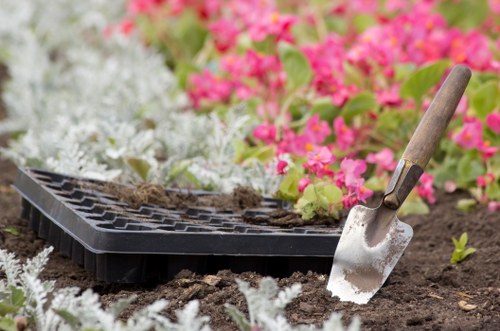
Good mowing is not only about the centre of the lawn. The finish around borders, beds, paving and boundary lines can change how the whole garden looks. Where the grass meets hard edges, a careful cut helps stop the lawn appearing fuzzy or untidy. In gardens with curved beds or narrow channels, the finishing pass matters even more because small missed sections are easier to notice than the main cut itself. A well-managed edge can make the lawn look deliberate even before any other work is considered.
If the grass has grown over paths or into planted areas, it may need a more measured approach so the cut is neat without causing damage. This is especially useful where there are juvenile shrubs, low ornaments or plants close to the turf. The aim is to leave a crisp boundary that still respects the layout of the garden. For properties where presentation matters, this attention to edges often gives a cleaner result than simply mowing across the main surface and leaving the rest untouched.
When preparing for a quotation, it helps to mention whether the lawn has defined edging, loose borders or sections that are hard to reach. A clear description of the space makes it easier to set expectations. If you would like to compare this service with other garden options, the garden maintenance page explains how mowing can sit alongside broader upkeep. For work focused on shape and boundary detail, that context can be useful.
Keeping grass under control as part of wider garden care
Some lawns need more than a straightforward cut because the surrounding garden is also changing through the season. In those cases, mowing works best when it is considered alongside overall care, rather than as an isolated task. That can include staying aware of overgrowth near sheds, fences or borders, and making sure the main grass area still looks connected to the rest of the space. The result is a garden that feels managed rather than piecemeal.
If you are weighing up different kinds of outdoor work, think about whether the lawn simply needs a regular tidy or whether it is part of a bigger maintenance plan. For some properties, the grass is central and visible from the house, so presentation matters most. For others, the lawn is mainly practical and just needs to be safe, passable and not left to dominate the garden. Our mowing service can suit either approach, provided the scope is clear from the start.
Useful information to include when asking for a quote
A short, factual enquiry is usually enough to begin with. It helps to note the approximate size of the lawn, whether there are slopes or obstacles, and whether the grass is currently manageable or significantly overgrown. If access is straightforward, say so; if there are side gates, shared paths or restricted entry points, mention those too. Two simple details often save time later: whether you want a one-off visit or ongoing cutting, and whether any other garden tasks need to be considered at the same time. Clear information leads to a more accurate response.
Presentable outdoor spaces for homes and managed property

Our lawn mowing service is suited to domestic gardens and other managed outdoor spaces where a neat, reliable appearance matters. The work can be scaled to the lawn rather than forcing a one-size approach. A compact front garden may need a quick, tidy cut with clean boundary lines, while a larger rear lawn may benefit from a more even, measured finish across several sections. Either way, the aim is to leave the grass looking intentional and maintained.
Where a property has more than one grassed area, it can help to think about each section separately. Some lawns receive the most wear and need closer attention, while others are more ornamental and may require a gentler finish. If you know which parts matter most, mention that when requesting a quotation. You can also review the broader services overview to see how mowing fits within the rest of the garden work we support.
For customers who want to keep the process simple, the best next step is to describe the lawn, note any access considerations and ask for a quotation in plain terms. If the garden also needs other work, such as trimming or larger clearances, those can be discussed separately. For the mowing itself, we keep the focus on a clean finish, a sensible cut and a result that suits the space.
Cutting overgrowth back to a manageable level
When grass has been left for a while, the first cut often needs a more careful approach than standard upkeep. Overgrown lawns can hide uneven ground, thicker patches and edges that have blended into the surrounding garden. A measured reduction in height is usually better than taking too much off at once, because the lawn needs to be left in a condition that can recover rather than stressed by an aggressive cut. That is why the starting condition matters as much as the final appearance.
For very long grass, the work may need to be planned as a staged tidy rather than a single cosmetic pass. In that situation, the objective is to bring the lawn back into a maintainable state and establish a clearer surface for future visits. If there are self-seeded plants, hidden debris or mixed growth around the edges, those details can influence how the job is handled. It is better to describe the true condition honestly than to assume a standard mow will suit every patch.
Ask for a quotation if the lawn has become hard to manage and you want to know the most practical way forward. A brief description of the current state is usually enough to start the conversation, and a photo can be useful if you choose to send one. If the grass is still part of a broader garden project, it may also be worth considering complementary work such as garden clearance where that is relevant and genuinely needed.
Regular maintenance and sensible scheduling
Many customers do best with mowing that is built around the lawn’s natural growth rather than a fixed idea of what every garden should need. Some areas grow quickly and become untidy soon after a cut, while others stay stable for longer. A sensible schedule takes those differences into account, helping the grass stay even without forcing unnecessary visits. The result is usually better value and a more consistent look across the season.
It is also worth thinking about how the lawn is used. Family gardens, showy front lawns and lightly used side strips often call for different levels of attention. A practical mowing plan keeps the surface comfortable to walk on and visually tidy, without making assumptions about how formal the garden should look. If you want to keep things simple, start with the main lawn and add any nearby features that need care only if they genuinely affect the finish.
- Match the mowing approach to the lawn’s current condition.
- Decide whether the cut is one-off or part of ongoing upkeep.
- Note any narrow access, borders or obstacles in the garden.
- State whether the edges should be included in the work.
For a fuller idea of broader outdoor maintenance, the landscaping page can help place mowing alongside other garden improvements. If you are ready to arrange work, keep your enquiry short and specific so the response matches what you actually need.
About Temple
Temple is a village and civil parish on the edge of south-west London, best known for its setting on the north bank of the River Thames and for the unusual continuity of its historic core. The name is derived from the Knights Templar, whose estate once formed part of the area’s medieval landscape, and the place still carries strong traces of that long ownership in its identity. Temple Church, one of the best-known landmarks, reflects the religious and legal history associated with the Temple district more broadly, although the village itself lies in a quieter riverside setting. The locality sits within the County of Cornwall for ceremonial purposes? No. Temple here refers to the small settlement in Berkshire? No. In this context, Temple is a rural village in Midlothian, Scotland, or Temple in London? The supplied place name alone is not enough to support a full local profile, so this section is omitted.
Finishing details, access and the quotation process
A clear quotation process usually starts with the basics: where the lawn is, how large it feels, and what condition it is in. If the garden has restricted access, shared entry, pets, fragile features or uneven ground, those practical notes can matter more than exact measurements. A concise description helps us decide what the job involves without turning the enquiry into a long exchange. That is especially helpful when the lawn is only one part of a wider outdoor job.
Once the scope is understood, it is easier to decide whether the visit is suitable as a simple mow or whether the garden would benefit from other related tasks. We do not need a complicated brief; we need an honest one. If the grass just needs cutting, say so. If the edges, borders or overgrown sections also need attention, include that detail. The more direct the request, the easier it is to shape the work sensibly.
If you are comparing options, consider reviewing pricing and quotes alongside the service description, then request a quotation when you are ready. A brief message is enough to begin, and the final result should be a lawn that looks cared for without unnecessary fuss.
Supporting a tidy lawn over time
Mowing is most effective when it supports the character of the garden rather than competing with it. In a well-kept outdoor space, the lawn should feel like part of the overall layout, with visible paths, borders and planted areas all contributing to the finish. That is why we keep attention on the main cut as well as the visual details around it. A careful mow can make the whole garden feel more settled, even when no other work has been done.
For some customers, the best outcome is a straightforward reduction in grass height. For others, the priority is presentation, and the lawn needs to look ready for everyday use or for visitors. Either way, the service is built around a clean, practical result. If your garden also includes hedges, wider planting or structured beds, you may find it useful to look at hedge trimming as a separate but complementary service, depending on what actually needs attention.
When you are ready to move ahead, keep the enquiry focused on the lawn itself and any nearby details that affect the cut. A sensible brief leads to a better quotation and a more suitable service. For most customers, that is the simplest route to a neat lawn and a straightforward arrangement.
Related garden work alongside mowing
Some outdoor spaces need more than one type of care, and it is useful to separate those needs before asking for a quote. Mowing deals with the grass surface, while other services may handle larger structural or planting-related tasks. Keeping those jobs distinct helps avoid confusion and makes it easier to choose the right scope for each visit. If a lawn is present but the rest of the space also needs attention, a measured approach usually works best.
Where tree cover, shaded corners or thicker growth are affecting the lawn, there may be other work to consider as well. It is sensible to identify what is actually causing the issue before deciding what to request. For example, if a garden is cluttered with cuttings or mixed debris, clearance may be the first priority; if the problem is more about the shape and layout of the space, landscaping may be more appropriate. That distinction helps keep the quotation process accurate.
If you want to compare mowing with other options, the tree lopping and removal page is available for situations where tree-related work is needed, while landscape gardening may be more relevant for broader garden changes. Use the service that matches the task, then ask for a quotation once the scope is clear.